These are some quick notes. If you’ve got questions about shading/colors lemme know I’ll edit the original post.
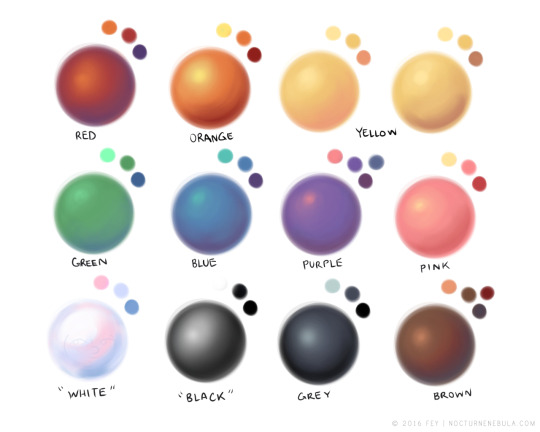
When making a piece I always want to make sure the overal rendering is good. Eyes are drawn to contrast. When you pick your colors make sure there are enough pleasant hues, enough contrasting values, and ENOUGH SATURATED AND DESATURATED COLORS
When you choose to do high saturated flat colors make sure your shadows and lights are desaturated. If you make your lights warm make your shadows cool. For values always check if your piece still looks appealing under a black and white gradient filter. If not, bump up those values! If your piece looks fine in black and white but trash in color HANDLE YOUR SATURATION.
Again this is my personal take on color! It really depends on the situation and what you personally value, and in the end practice is your best friend.
it’s such a simple yet hard concept to grasp, right? i’m having loads of trouble starting since there’s no exact tutorial for it, so you’ve gotta broaden your search for the topic.
recommendations:
i recommend watching speedpaints to get a better understanding on how other artists do it
the color study tag on here has loads of pics to take inspiration from
this book called ‘color and light’ by james gurney i’m borrowing from a coworker has tons of stuff that goes deep within the understanding of color (it’s a LOT to take in, i’ve had this for 3 weeks and i still haven’t finished it)
i have a pretty basic understanding on choosing colors so i usually eyeball it instead from reference photos. but if you’re a beginner you need someplace to start, picking colors off the pics would be good, but don’t rely on it too much. it often leaves your drawings pretty bland since you’re straight up copying from the camera lens.
2) keep things quick and simple
you’re doing a color study, not an environmental study. i’m having trouble with over detailing my pieces but i’m making a conscious effort to stop caring since the main focus here is the colors, their relationship with the surrounding (even the sky has fricking layers i need to properly understand)
3) pick a picture that inspires you!
i usually pick out photos who has a clear contrast on stuff, so you’d wanna work on something that really attracts your eyes. google is a friend, don’t forget that. it’s better to reference of real life photos than fanart, and plus movie still/screencaps are a good place to see how the colors work out together
4) study your fave artist pieces
pick a piece you like the most and study it. what makes it attractive to you? why does this shade of pink go well with this sort of blue? you can color pick the piece and study their pattern in picking colors, some artists are using the same sort of color palette and it makes them stand out. try to find out why and experiment that method on your pieces of artwork.
so these are the only things that i have on my plate right now, and i still have a loooong way to go, lol. hope it helps!


 Chartreuse Abstruseness Export